Strengths Based Leadership
One of the most misapplied principles out there today is Strengths Based Leadership (SBL.) When I have discussed with people that you need to be aware of your biases and work to manage their impact, many people respond with, “No, everyone knows you need to lean on your strengths to be successful.” They don’t have the wrong answer, if this were a different question. But I am talking about leadership, not finding your optimal domain for personal satisfaction.
Personal Satisfaction versus Situational Leadership
Being aware of your strengths and finding a vocation that suits those strengths is a good thing. It would be silly for somebody that is good at visual design and drawing but bad at math to choose to be an accountant or financial analyst. You will be more successful as an individual contributor when you line up your calling with something you are good at.
Leadership is a different thing. I am not talking about the job title. There are many team leads, supervisors, mangers, directors, CEOs, etc. that are People in Positions of Power (PiPoP.) In Gallup’s research they found that the best leaders inspired Trust, Compassion, Stability, and Hope. “Perhaps this is why the most extraordinary leaders do not see personal success as the end itself. They realize that their impact on this world rests in the hands of those who follow.”(1)
Being a leader requires a different intention and purpose than just being yourself. This is where the PiPoP vs. Leader shift starts to happen, and it isn’t just about your role. Leadership behaviors are actions and speech you can exhibit regardless of position, it’s a choice. Am I focused on what I want, or am I thinking about what the team, the business, and our customers need?
Mutuality (The Four-Letter Word)
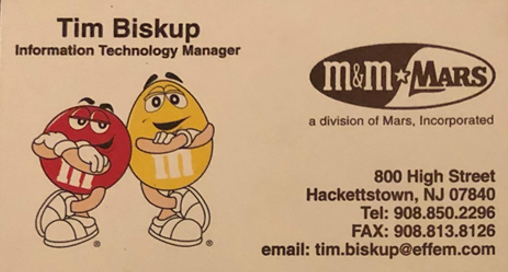
I am very grateful I had the opportunity to work for Mars, Inc. for 11 years.
Originally, I was very excited because it was the first major company I became aware of as a kid. When SKITTLES(R) first came out I thought, “Boy is M&M’s going to be angry that somebody stole their branding” (colorful lentil shaped candy with an S imprinted.) When I checked the back of the bag it said M&M/Mars 800 Hackettstown, NJ 07840. Then I checked the back of the MILKY WAY(R), 3 MUSKETEERS(R), and my Dad’s SNICKERS(R) and they all had the same company name and address. That kid at his grandma’s cabin in Northern Minnesota had no idea that 22 years later his business card would have that same company name and address on it.
Be that as it may, the real value was one of their core principles, Mutuality. “Mutuality is a belief with powerful implications. It recognizes that we benefit when others gain too and compels us to think about others’ interests as well as our own.”(2) Leadership was a focus, and mutual benefit was an expectation. One of the tools they gave us was the Lominger Leadership Architect, if you want more information on that I explain how it creates balance in my welcome post Welcome to AAYN. Essentially, as associates, we were expected to be very intentional about our interactions and behaviors to mitigate and measure our impact beyond ourselves.
Lominger’s focus is on intentionally changing how others are impacted by your actions and behaviors. SBL provides one way (intentionally selecting people with other strengths) but you also have the ability to adjust how you react and work through issues. Anyone who has tried empowering a diverse team knows that “trust, but verify” is one of the hardest intentional behavioral modifications out there.
Emotional Intelligence (EI)
This brings us to another often misapplied principle. I hear statements like this a lot, “Bob is emotionally intelligent, he has so much self-awareness.” As someone who has studied emotional intelligence for decades, I hear, “wow, that table is fantastic, it has one really nice leg.” Self-Awareness is only one part of EI. It is the ability to understand your feelings and how they shape your perceptions, thoughts, and impulse to act. Additionally, Self-Management, Social Awareness (empathy), and Relationship Management focus on regulating behaviors, understanding others’ needs, and building relationships.(3)
Even though the word Emotion is the focus of the name, it is all about your innate perceptions, thoughts, and impulses and how they impact others and affect outcomes. A strong Action Oriented Activator is likely to grow impatient when dealing with others that are Deliberative, Planning, Process Management biased. The strengths of you, your team, your client, and the leadership team will influence the behaviors and emotions exhibited.
If you are trying to lead, you have to take accountability for managing through these differences, emotions, and behaviors. The world is a constantly changing place, business is a high-pressure scenario, and humans are very complex beings. Leadership is not easy, and leadership is less about you and more about the team and what you accomplish together. You cannot effectively lead if you are focused solely on yourself and your needs. You can be a PiPoP, but you are not leading.
Healthy Environments
With all this flux and the dynamic needs of individuals, trying to create a successful environment sounds daunting and impossible. This is why you need to focus on creating an environment where these emotions and behaviors can self-monitor and self-mitigate. This is the last tool we will discuss in this article.
David Rock explains why collaboration is difficult, “just as the brain automatically categorizes any situation into a possible reward or threat, it does the same with people, determining, subconsciously, whether each person you meet is a friend or foe.”(4) This is part of why the shared values and principles at Mars were so important. Foe behaviors and actions were not tolerated, so interactions started with a more friendly stance, and mutual respect.
He has established the SCARF model as a way identifying the things that need to be managed to reduce the friend or foe threat reaction in the brain. {Status, Certainty, Autonomy, Relatedness, Fairness.} If your actions negatively impact their feeling of worth or position, create flux, disempower them, make them feel distanced, or feel they are being treated unfairly you will trigger a treat response.(5) Conversely, having a positive impact on their perceptions can trigger a reward response and make them more likely to listen and trust what you are saying.
It’s clear this isn’t easy, and perfection is not achievable. If you are leader, this gives you an indication on how to set up your team, your culture, and how to engage and set expectations with your teams’ interactions.
Intentional Individualized Leadership
I have chosen this term because it gets to the heart of it. One term people use is Servant Leadership. When overapplied or imitated you get a faux-humility or a tendency towards acquiescence or accommodation. You don’t have to be altruistic to be an effective leader. You need to recognize and empower your team’s value and put the need for successful outcomes higher than your need for everyone to be compliant with your way of working. This doesn’t mean keeping people on if they or you are struggling to realize their value. It’s being respectful and understanding that the do have value even if that doesn’t fit into what is needed for success within your team.
It worries less about good and bad or right and wrong, it focuses on what is needed and how to leverage it in a sustainable and resilient adaptive way. Be intentional. Be open to the options and evaluate then. Lead by example, whether you have a team to manage or not.
1 Rath, Tom. 2008. Strengths Based Leadership: Great Leaders, Teams, and Why People Follow. New York: Gallup Press. pp. 82, 94.
2 Mars, Inc. 2026. The Five Principles. https://www.mars.com/about/the-five-principles
3 Big Think. 2024. Daniel Goldman: The 4 domains of emotional intelligence. Dec 11. https://youtu.be/erfgEHHfFkU
4 Rock, David. 2009. Your Brain at Work. New York: Harper Collins. p. 162
5 NeuroLeadership Institute India & SouthAsia. 2013. SCARF Model Influencing Others with Dr David Rock. May 23. https://youtu.be/rh5Egsa-bg4