

The Weak Runner’s Head Start
Why You Can’t Hire Your Way Out of the AI Panic
If you are looking to bring AI into your workflow, stop looking outside your walls for a magical savior. 5 years from now, that 6-to-12-month head start won’t even be visible.
Why? Because a weak runner starting early cannot win a race against a fundamentally strong runner.

The Founder’s Friction: When the "Visionary" Becomes the Bottleneck
In the early days, a founder’s ego was the engine. But as you scale, that same ego can turn into the emergency brake. It’s not just Founder’s Syndrome, it’s the 'Accountability Vacuum,' where a leader stays in the clouds of 'strategy' to avoid the risk of being measured on the ground. Your job isn't to fix the founder; it’s to build the system that doesn’t need them to change.
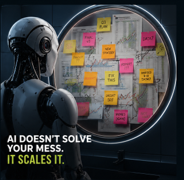
The Mirror of Slop: Why AI’s Biggest Problem is That It Learned from Us
AI isn't a calculator; it's a mirror. If it’s producing “slop,” it’s because it was trained on the decades of slop we’ve produced in our boardrooms and spreadsheets. We expect AI to be smart, but it’s actually doing something much more human: it's prioritizing the loudest signal over the most accurate one.

Most Process Breakdowns Start as Decision Breakdowns
When execution breaks, the instinct is always: ‘We need a better process.’ But you can’t fix a thinking problem with a template. A process tells people what to do, but a Decision System shapes how they think about the work. If your team is constantly debating the 'how,' you don't have a process problem, you have a Decision Architecture failure.

The Invisible Moat: Why Your Competitive Advantage Isn’t What You Think
We were selling $2 worth of candy for $20. And demand didn’t drop. It tripled. Most leaders believe competitive advantage comes from what they can see: pricing, tech, distribution. But real advantage lives in the invisible system underneath. If your advantage can be benchmarked and copied, it isn't an advantage. It’s just a target.
The Myth of Seamless Marketing: Why Every Tool Promises Ease but Delivers Complexity
Every generation of technology repeats the same message: ‘You don’t need expertise. You just need our platform.’ And every generation of leaders eventually discovers the same truth: tools don’t remove complexity. They expose it.

Your Marketing Isn’t Failing. Your Decision System Can’t Handle Economic Reality.
Markets behave economically. Your business usually doesn't. As you scale, costs rise and efficiency declines, that's not a failure, it's a law of physics. The problem isn't your marketing; it's a decision system that follows arbitrary shortcuts instead of economic signals.
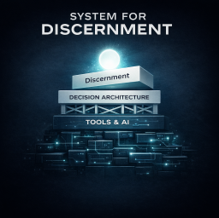
The Age of Outsourced Discernment
AI can recognize a pattern. It can optimize a path. It can accelerate execution. But what it cannot do (and what we’ve quietly stopped doing) is wrestle with whether the path was worth taking. We aren't failing because we lack tools; we're failing because we've tried to outsource the hardest part of leadership: Discernment.
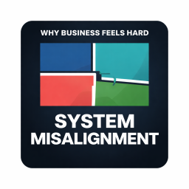
Why Your Business Feels Harder Than It Should
Nothing is obviously wrong, but something doesn’t feel right. Your team is busy, your KPIs look healthy, but progress feels flat. The problem isn't execution; execution is just where the problem shows up. Your business feels hard because your Vision, Structure, Culture, and Execution have drifted apart.

Why Leadership Requires You to Act Against Your Nature
Most leadership advice tells you to ‘be yourself.’ It sounds empowering. It’s also one of the most limiting ideas in business. Leadership isn't self-expression; it’s self-regulation. Your instincts were optimized for your individual success, not for the system you are now trying to lead.
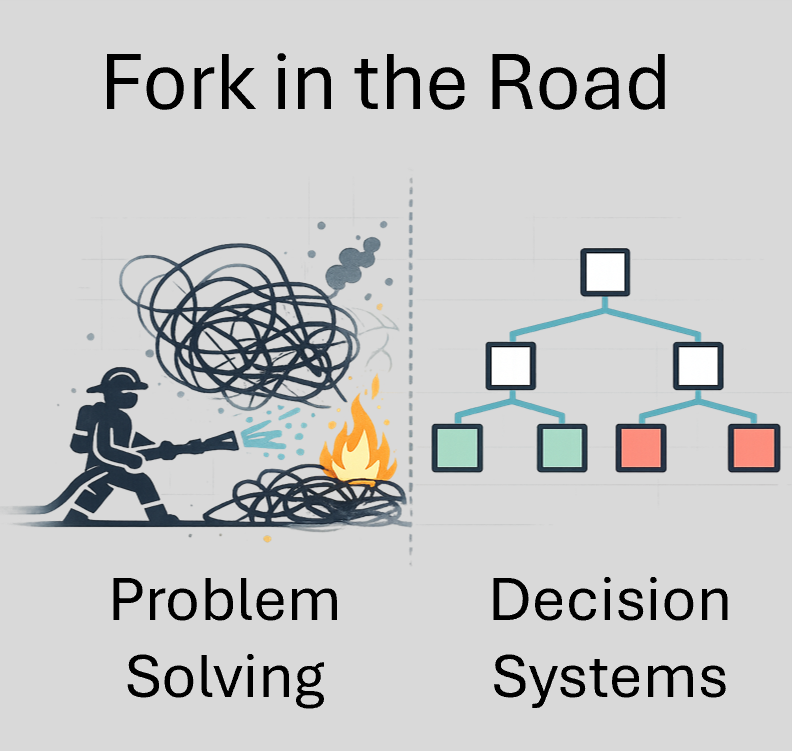
Stop Solving Problems. Start Framing Decisions.
If you want to be happy, take a personality test. If you want to lead a high-growth system, you have to stop obsessing over your identity and start architecting your impact. Your strengths got you here, but they are the very things creating the bottlenecks that stop you from going further

Your Strengths Are Probably Holding You Back
Most leadership advice tells you to lean into your strengths. But what happens when your strengths are the thing breaking the system? Overused strengths don’t just create blind spots, they distort decisions, create dependency, and quietly cap your leadership impact. This is the part most leaders never learn.
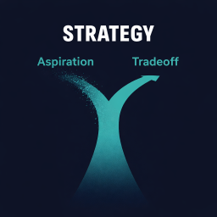
That’s Not a Strategy. It’s a Wish.
Growth is not a strategy. Revenue targets are not a strategy. Market leadership is not a strategy. Most 'strategic plans' are just a collection of wishes that avoid the one thing real strategy requires: a painful tradeoff. If your decision doesn’t involve a meaningful sacrifice, it isn’t strategy, it’s just aspiration.