

The 12-Hour-a-Year Workload: Why We Are Addicted to the Grind
I told the Chairman I could give him a breakthrough every week. He told me to stop. He told me that if I gave him two (like the one I just gave him) a year, I was successful. He was effectively telling me to work 12 hours a year. Why? Because most leaders are trapped in the Moral Fallacy of the Grind, the belief that for an impact to be big, the effort must be painful.

Most Process Breakdowns Start as Decision Breakdowns
When execution breaks, the instinct is always: ‘We need a better process.’ But you can’t fix a thinking problem with a template. A process tells people what to do, but a Decision System shapes how they think about the work. If your team is constantly debating the 'how,' you don't have a process problem, you have a Decision Architecture failure.

The Invisible Moat: Why Your Competitive Advantage Isn’t What You Think
We were selling $2 worth of candy for $20. And demand didn’t drop. It tripled. Most leaders believe competitive advantage comes from what they can see: pricing, tech, distribution. But real advantage lives in the invisible system underneath. If your advantage can be benchmarked and copied, it isn't an advantage. It’s just a target.

The Age of Outsourced Discernment
AI can recognize a pattern. It can optimize a path. It can accelerate execution. But what it cannot do (and what we’ve quietly stopped doing) is wrestle with whether the path was worth taking. We aren't failing because we lack tools; we're failing because we've tried to outsource the hardest part of leadership: Discernment.
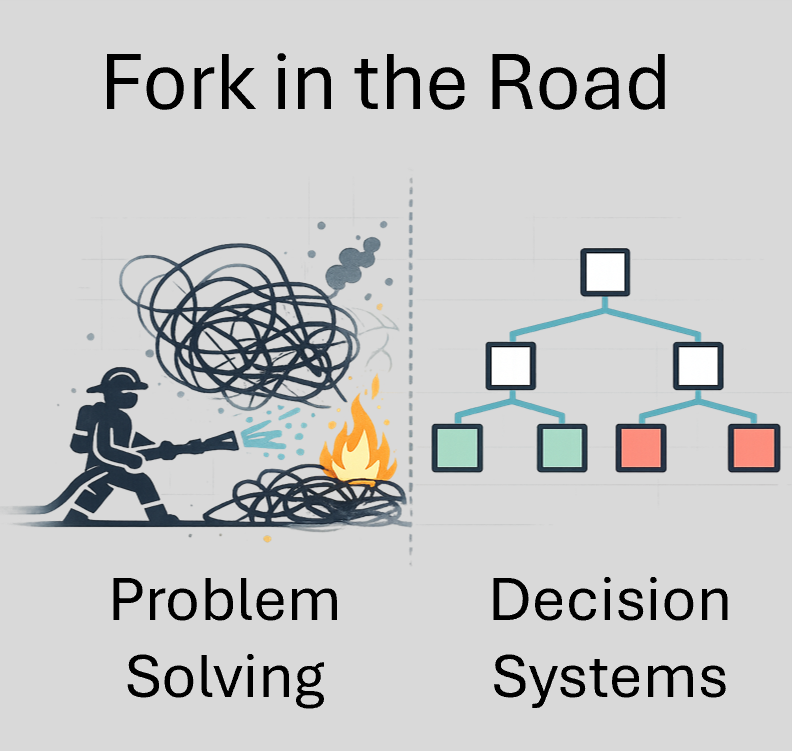
Stop Solving Problems. Start Framing Decisions.
If you want to be happy, take a personality test. If you want to lead a high-growth system, you have to stop obsessing over your identity and start architecting your impact. Your strengths got you here, but they are the very things creating the bottlenecks that stop you from going further

Your Strengths Are Probably Holding You Back
Most leadership advice tells you to lean into your strengths. But what happens when your strengths are the thing breaking the system? Overused strengths don’t just create blind spots, they distort decisions, create dependency, and quietly cap your leadership impact. This is the part most leaders never learn.

The Four System Failures That Make Smart Marketing Leaders Do Dumb Things
Companies don’t stall because their marketing is bad, they stall because their system is misaligned. Misread ROAS, shiny‑object chasing, misapplied expertise, and cost‑center thinking are symptoms of a deeper structural problem. Here’s what’s actually breaking your marketing decisions.

“If your title says X but your day is 70% Y…”
“You’re not failing. You’re filling the gaps no one else sees. And the more capable you are, the worse it gets.”
If your title says X but your day is 70% Y… you’re not unfocused, you’re filling the gaps no one else sees.
This post explains why high-functioning operators get pulled into the cracks, how burnout and blame emerge, and what quadrant-aware change actually looks like.