
The Expert Blindspot
How to Dismantle Broken Systems with Basic Logic
When organizations scale, they naturally default to Expert Deference. We are conditioned to believe that because someone possesses a specific title, a specialized certification, or a high-entry-knowledge degree, their operational systems must be flawless.
How Companies Rebuild Clarity
Most organizations try to scale by perfecting the map. But a map only works if the terrain never changes. In a high-growth environment, you don’t need a better map; you need a compass. You don’t scale by adding more steps; you scale by aligning the thinking behind the steps.

The Company That Couldn’t See Itself
Organizations don't fall apart because of bad intentions; they fall apart because they can’t see themselves clearly. Beneath every 'aligned' meeting is a slow drift in meaning where teams hear the same words but apply entirely different logic. You don’t have a process problem; you have an interpretation problem.

The 12-Hour-a-Year Workload: Why We Are Addicted to the Grind
I told the Chairman I could give him a breakthrough every week. He told me to stop. He told me that if I gave him two (like the one I just gave him) a year, I was successful. He was effectively telling me to work 12 hours a year. Why? Because most leaders are trapped in the Moral Fallacy of the Grind, the belief that for an impact to be big, the effort must be painful.
The Mirror of Slop: Why AI’s Biggest Problem is That It Learned from Us
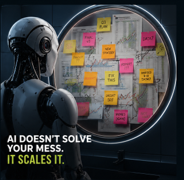
AI isn't a calculator; it's a mirror. If it’s producing “slop,” it’s because it was trained on the decades of slop we’ve produced in our boardrooms and spreadsheets. We expect AI to be smart, but it’s actually doing something much more human: it's prioritizing the loudest signal over the most accurate one.
Most Process Breakdowns Start as Decision Breakdowns
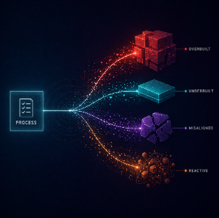
When execution breaks, the instinct is always: ‘We need a better process.’ But you can’t fix a thinking problem with a template. A process tells people what to do, but a Decision System shapes how they think about the work. If your team is constantly debating the 'how,' you don't have a process problem, you have a Decision Architecture failure.
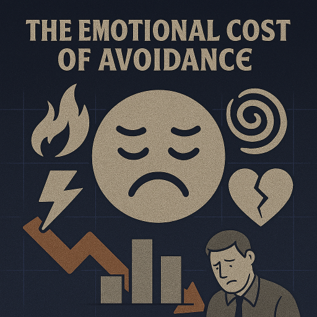
The Emotional Cost of Avoidance: Why Leaders Drift, Teams Overfunction, and Chaos Spreads
Avoidance is one of the most expensive behaviors inside an organization, and it rarely shows up on a P&L. It creates shame, fear, paralysis, overfunctioning, resentment, and downstream chaos that teams quietly absorb. This breakdown shows how avoidance becomes a systemic pattern, and why clarity is the only path out.
The Chaos Cycle: Why Agencies Stay Stuck (and How Leaders Break It)
Agencies and services companies don’t fall apart because of one bad month, they fall into a predictable cycle of overcommitment, overfunctioning, overwhelm, and oversimplification. This piece breaks down why chaos becomes the default operating system in services businesses, how leaders unintentionally reinforce it, and what it takes to finally break the pattern and build a calm, scalable company.