The 4 Archetypes of Dysfunction (and What They Reveal About Your Leadership System)
Most leaders don’t struggle because they’re incompetent. They struggle because they’re operating inside a system that’s misaligned, and they can feel the friction long before they can name it. That’s why last week resonated so strongly with leaders. They weren’t responding to “tips” or “leadership advice.” They were responding to patterns, patterns they’ve been living with for years.
This week, we’re going deeper. Because once you can name the pattern, you can finally see the system behind it. And across hundreds of teams, four dysfunction archetypes show up again and again. They’re not personality types. They’re not labels. They’re not judgments.
They’re systemic patterns that emerge when one or more quadrants of the leadership system fall out of alignment:
Vision
Structure
Culture
Execution
When these quadrants drift apart, the organization starts behaving in predictable (and painful) ways.
Let’s name the four most common patterns.
1. The Ghost Ship
High Vision • Low Structure • High Culture • Low Execution
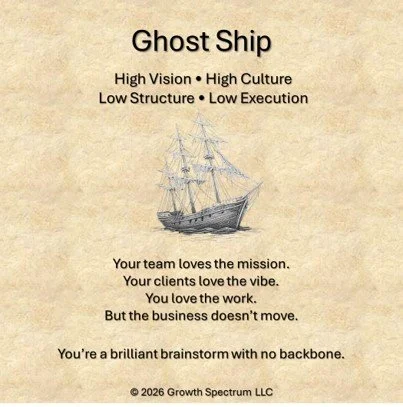
The Ghost Ship is full of smart, passionate people who care deeply about the mission… but can’t seem to turn that mission into consistent results. You’ll hear things like:
“We have great ideas, but nothing sticks.”
“We’re always starting things, but never finishing them.”
“Everyone is aligned emotionally, but not operationally.”
The Ghost Ship feels inspiring on the surface, but direction without structure creates drift. People feel busy, but not productive. Motivated, but not grounded. Committed, but not clear. This archetype shows up most often in founder‑led companies where vision is strong, culture is warm, but the operational backbone hasn’t caught up.
The cost: Momentum without traction.
2. The Grinder’s Treadmill
Low Vision • High Structure • Low Culture • High Execution
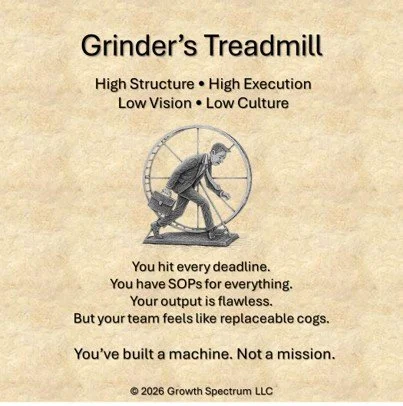
This is the “work harder, not smarter” organization. People are busy. Processes are defined. Tasks get done. But nobody knows why they’re doing any of it. You’ll hear things like:
“We’re drowning in work, but not moving forward.”
“Everything is urgent, but nothing is strategic.”
“We’re efficient, but exhausted.”
The Grinder’s Treadmill is the natural out
The Grinder’s Treadmill is the natural outcome of strong execution without a clear vision or a healthy culture. People follow the process, but the process isn’t connected to purpose.
The cost: Burnout without progress.
3. The Benevolent Bottleneck
Med-High Vision • Med-Low Structure • Med‑High Culture • Med-Low Execution
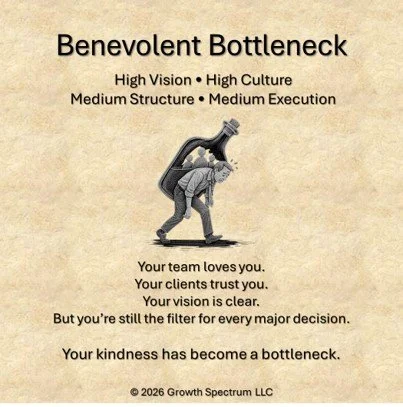
This is one of the most emotionally complex archetypes, because it’s rooted in good intentions. The leader cares deeply. The team trusts them. Everyone wants to do the right thing. But because the leader is the most capable person in the system, everything flows through them:
decisions
approvals
problem‑solving
conflict resolution
strategic clarity
You’ll hear things like:
“We’re waiting on X before we can move forward.
“I don’t want to make the wrong call.”
“Let’s run it by the leader first.”
The Benevolent Bottleneck doesn’t happen because the leader is controlling. It happens because the system is underbuilt, and the leader is over-relied on.
The cost: Good intentions that slow everything down.
4. The Fragile Empire
Med-High Vision • Low Structure • Moderate Culture • High Execution
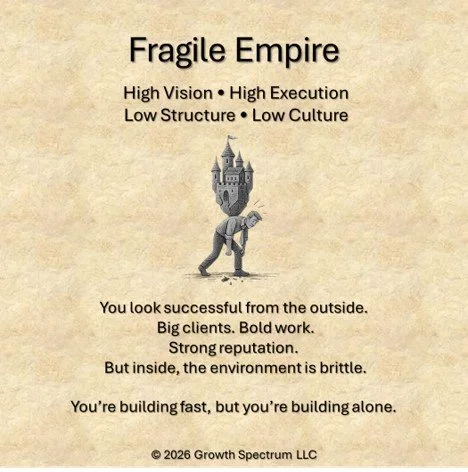
This is the organization that looks successful from the outside, fast growth, strong demand, impressive wins … but internally, everything feels one bad week away from collapse. You’ll hear things like:
“We’re scaling, but it feels chaotic.”
“We’re growing faster than we can support.”
“We’re hitting numbers, but it doesn’t feel sustainable.”
The Fragile Empire is what happens when execution outpaces structure.
The team is talented. The vision is clear. The results are real.
But the foundation can’t support the weight.
The cost: Growth that breaks the system instead of strengthening it.
Why These Archetypes Matter
Because they’re not random.
They’re not personality issues. They’re not “bad leadership.” They’re not fixed traits. They’re signals, early warning signs that one or more quadrants of your leadership system are misaligned. And once you can name the archetype, you can finally ask the right questions:
Where is the friction actually coming from?
Which quadrant is underdeveloped?
Which quadrant is over-relied on?
What’s the smallest change that would create the biggest improvement?
What’s the real root cause behind the symptoms?
This is where clarity begins.
Archetypes Aren’t Labels, They’re Signals
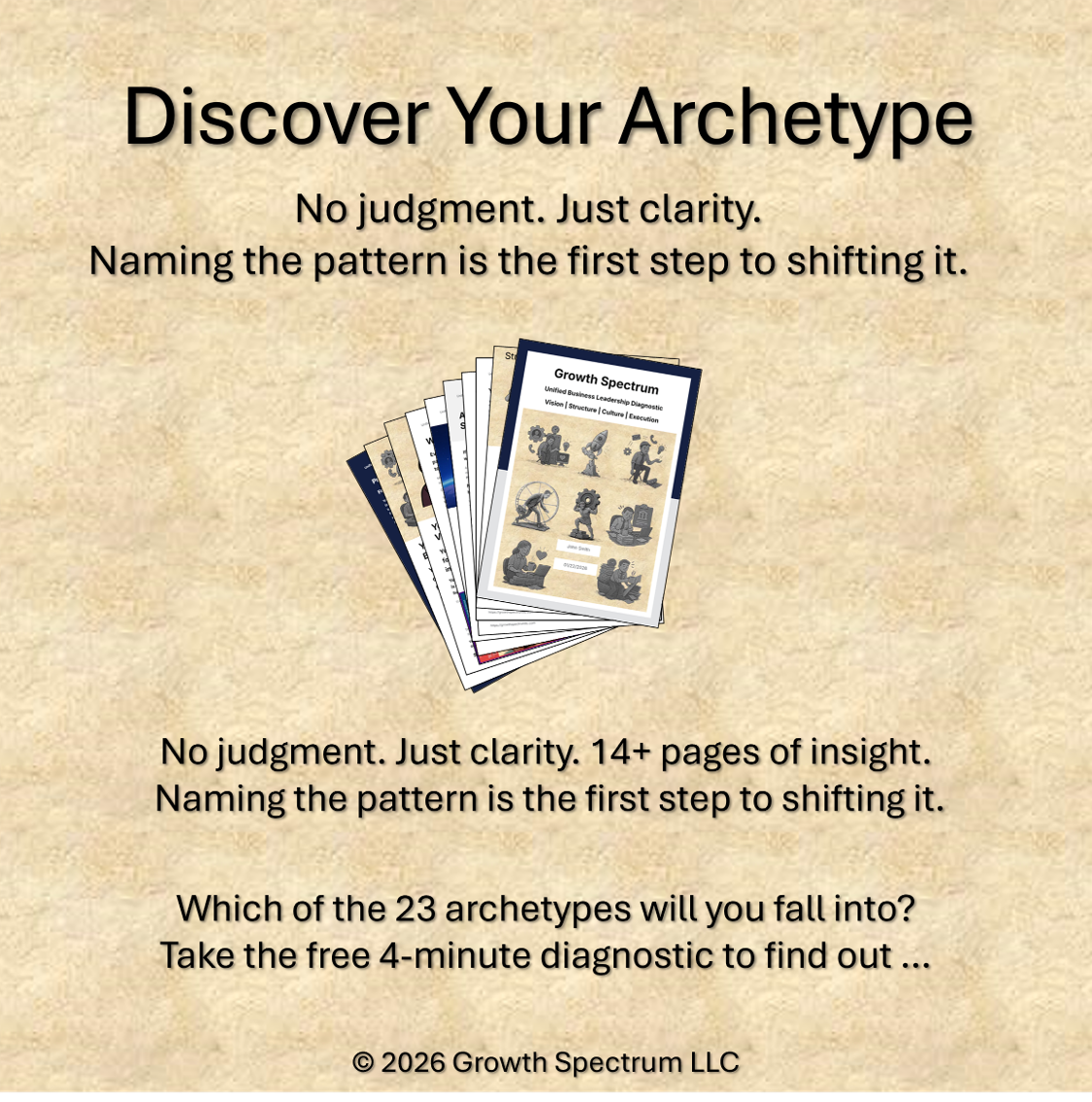
These four dysfunction patterns aren’t judgments about leaders or teams. They’re early warning signs that Vision, Structure, Culture, and Execution have drifted out of alignment. Once you can name the archetype, you can finally see the system behind it, and the smallest changes that create the biggest improvements.
If you’ve been feeling friction you can’t quite explain, you’re not alone. You’re seeing the system clearly.
Be sure to read this next
These pieces deepen the pattern and help you understand where drift begins:
Why Organizations Fix Symptoms Instead of Systems
Why teams feel the pain first — and why leaders often miss the root cause.The Chaos Cycle: Why Agencies Stay Stuck
How urgency, overfunctioning, and leadership habits distort execution.The 3 Archetypes of Leadership Drift
The predictable ways leaders get pulled off course, and how to recognize the signs.
Ready to see your own archetype?
If you want a structured way to understand which quadrant is over‑relied on — and where your system is drifting — start here:
A 20‑question assessment that maps your leadership system across Vision, Structure, Culture, and Execution.
See how others rebuilt alignment
Real examples of organizations that moved from friction to clarity:
Build a leadership system that doesn’t drift
If your team is overwhelmed, your roles are unclear, or your execution feels inconsistent, here’s how we help organizations rebuild their operating system:
Not sure where to start?
Tell us what’s going on. We’ll point you in the right direction.